By Mohamed Dhugad
SouthWest Peace Week 2025 in Baidoa marked a turning point in Somalia’s state-building journey. For one week, the city became a hub of dialogue, innovation, and cultural pride, bringing together academics, civil society, youth influencers, and state leaders. The launch of the National Academy of Maay Culture and Sciences stood out as a historic milestone, while critical debates on governance, women’s leadership, and resource-sharing agreements gave the event national weight. Civil society groups and digital youth voices amplified its reach far beyond Baidoa.
As a participant, I have sought to capture both the achievements and the challenges of this historic week. The experience offers a blueprint for policymakers, civil society, and citizens who are committed to building a more inclusive and peaceful Somalia.
Political and Cultural Weight
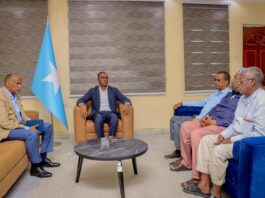
The presence of the SouthWest State President throughout most sessions underscored the political seriousness of the event, while the participation of H.E. Hassan Moalim Mahmoud, Minister of Justice and Constitutional Affairs, gave it national significance. Although H.E. Farah Sheikh Abdulqadir Mohamed, Minister of Education and Higher Education, was absent, his absence was conspicuous at a moment when both the President and the Justice Minister were elevating Af-Maay to national recognition.
The Maay Academy cannot remain only a regional milestone. It must be integrated into Somalia’s national framework of education and culture. The Ministry of Education has the responsibility to translate this momentum into curriculum, teacher training, and national recognition. Without such leadership, the vision expressed risks remaining symbolic rather than transformative.
Economic Vision and Cultural Renewal
The SouthWest Economic and Innovation Forum showcased entrepreneurship as a driver of development. Innovators and young entrepreneurs presented solutions proving that peace and stability create fertile ground for creativity, investment, and transformation. It reinforced the lesson that sustainable growth cannot exist without stability, and youth innovation is central to Somalia’s future.
The most historic moment was the launch of the National Academy of Maay Culture and Sciences. President Cabdicasiis Xasan Maxamed declared, “The academy and the establishment of the Maay Somali alphabet script are something that belongs to all Somalis.” This was more than a cultural milestone: it was an act of justice, affirming that Somalia’s unity is strongest when built on respect for diversity. He emphasized the need to complement the Maxaa Tiri script by developing the Maay alphabet, to preserve the long cultural history of the SouthWest people.
The Academy provides SouthWest with an enduring legacy and offers the federal system a model for preserving linguistic and cultural identities.
Governance and Constitutional Questions
A critical session by the Institute for Research, Analysis and Dialogue (IRAD) examined the Baidoa Resource Sharing Agreement. Former Federal Minister of Petroleum and Mineral Resources, Mohamed Mukhtar Ibrahim, revealed sections that contradict Somalia’s new constitution, exposing grey areas needing urgent review. The message was clear: peace agreements and development accords must align with constitutional law to avoid disputes and mismanagement.
Minister Xasan Macalin added that cultural and linguistic rights form part of this constitutional challenge. He noted that the recognition of Maay has now shifted from aspiration into constitutional reality: “Now that the Maay script has been written, a constitutional provision has been implemented.”
This debate highlighted a national lesson: Somalia’s federalism remains incomplete. Without harmonization between agreements and constitutional law, instability looms. By surfacing contradictions, SPW2025 advanced a more honest and necessary national conversation on governance.
Gender and Inclusion
The Ministry of Women, Family Affairs, and Human Rights of SouthWest State convened a vital dialogue on women’s leadership in peacebuilding. Female leaders, academics, and activists underscored that women are not peripheral to peace but central to it. Their call for recognition and representation was a reminder that any peace process excluding women is incomplete and unsustainable.
Civil society’s role was equally important. Somali Youth Vision (SYV), among others, not only participated but also volunteered to support the conference. Their engagement highlighted that peacebuilding requires both state and societal energy. Youth influencers with millions of followers in social media extended the messages of peace, culture, and innovation to national and diaspora audiences, amplifying the week’s significance.
Intellectual Exchange and Personal Reflections
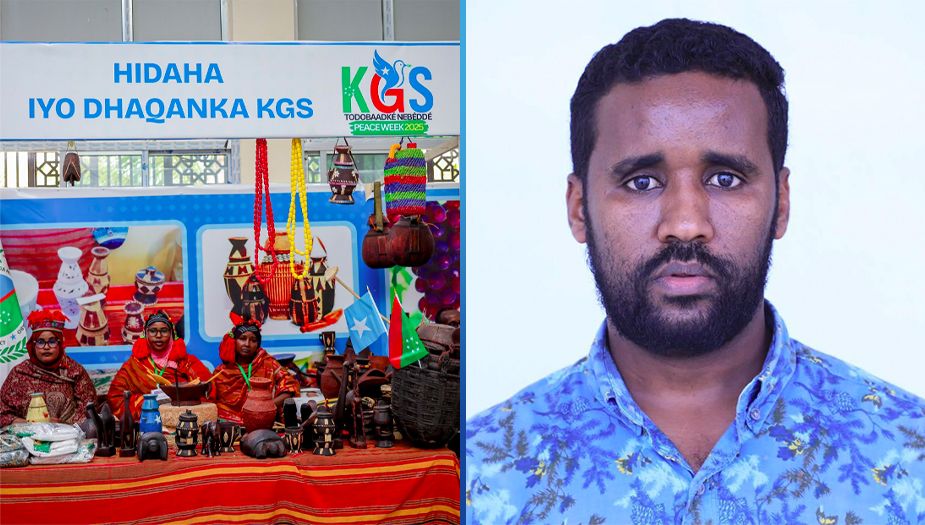
The Koonfur Galbeed Book Fair enriched the week with intellectual and cultural exchange. Writers, poets, and publishers engaged the public under the theme of strengthening diversity and social cohesion. Personally, I purchased المنارة الهادية إلى تاريخ إمارة بارطيري الإسلامية (The Guiding Beacon to the History of the Islamic Emirate of Baardheere) and Keydka Taariikhda Soomaaliya (Archive of Somali History). These works were deeply personal for me, as both of my parents were born in Baardheere, once a center of Islamic learning. The books reconnected me to my family’s intellectual and spiritual heritage.
I also gifted copies to Ambassador Aadan Xasan Aadan (Belelo), a distinguished intellectual, co-author of the Somali Dictionary, and now Cultural Advisor to the President of Djibouti. This gesture captured the spirit of the Book Fair, where authors, readers, family histories, and regional ties met in meaningful exchange.
Conclusion and Call to Action
SouthWest Peace Week 2025 will be remembered as a historic turning point, proving that peace is lived through books, debates, academies, and innovation. Its success should inspire all Federal Member States to adopt Peace Weeks as annual traditions that deepen trust between governments and citizens, celebrate culture, and expand youth-driven innovation.
While the achievement belongs first to SouthWest State, its lessons belong to the nation. The Federal Government should endorse and replicate it across Jubbaland, Galmudug, Puntland, Hirshabelle, and Waqooyi Bari so that what began in Baidoa becomes a national culture of dialogue and renewal.
About the Author
Mohamed Dhugad is a civic policy advocate and humanitarian expert with more than a decade of experience in humanitarian and development work. He writes extensively on governance, infrastructure, and youth empowerment, contributing to national debates on Somalia’s democratic transition and state-building.