
Eng. Adam Mohamed Kheyre, may God have mercy on him, was more than a name – he was a promise, a life of service, and a bright future for Baidoa. A graduate of Zamzam University of Science and Technology and an alumnus of Baidoa Model School (BMS), Adam served as Head of the Faculty of Agriculture at Zamzam University’s Baidoa Campus, shaping young minds and contributing to the growth of agricultural education in his hometown.
On the evening of Wednesday, 4th February 2026, while at his home in the outer suburbs of Baidoa, he was struck by stray bullets amid the chaos of armed clashes, and his life was tragically cut short. He was buried in Baidoa today (Saturday, 8 February 2026). His passing is not just a personal loss to family, friends, and the university community — it is a painful symbol of how ordinary lives are shattered when violence invades the sanctity of home and hearth. Dozens of security forces were killed alongside civilians – who were caught in the crosshairs.
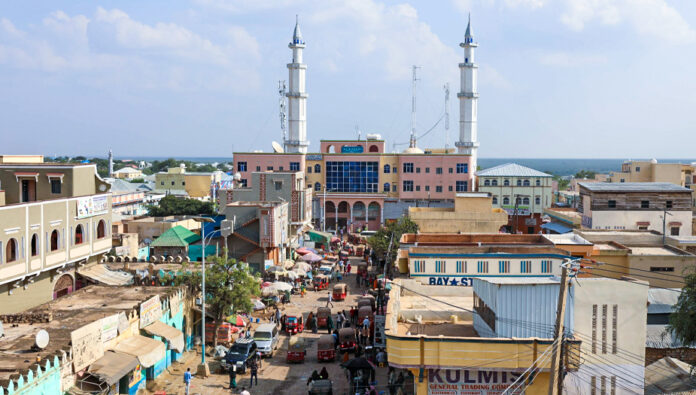
Baidoa, located roughly 250 kilometres west of Mogadishu and serving as the interim capital of the South West State, had been slowly reclaiming stability, commerce, and a sense of normalcy. Yet that evening, the usual calm of the famous ‘Heavenly Baidoa’ was broken by the sound of gunfire and explosions that reverberated across the city. What followed over the next two days was a troubling sequence of armed confrontations that shook the city’s sense of safety.
The immediate effects of the skirmishes were swift and severe. Flights to and from Baidoa were suspended, businesses shut down, telecommunications were cut, and daily economic activity ground to a halt. With mobile communication disrupted, residents struggled to access mobile money services – an essential lifeline for food, water, and basic needs. Health facilities received civilians wounded in the fighting, including women and children, while some neighborhoods saw residents fleeing to safer areas. These disruptions compounded existing challenges, including water shortages already affecting parts of the city.
Whatever the tussle, it shouldn’t disrupt the daily lives of ordinary people. The true cost of these confrontations is not measured in political gains or territorial control, but in the fear imposed on civilians whose only wish is to live peacefully. Traders closed their shops, families remained indoors, and children were kept away from schools as uncertainty gripped the city.
As details emerged, the underlying causes of the violence began to surface. According to media sources, the clashes were rooted in a land dispute near the livestock market on the outskirts of Baidoa. Orders to vacate government land, allegations of encroachment, and competing claims quickly escalated into confrontation. The involvement of armed militias, security forces, and politically connected actors transformed what could have been a civil dispute into a city-wide security crisis.
Such flare-ups point to deep-seated grievances rooted in injustices that refuse to heal. Land ownership disputes, weak dispute-resolution mechanisms, politicized security structures, and unresolved political rivalries continue to fuel instability across Somalia. Baidoa’s experience is a reminder that peace cannot be sustained by force alone; it requires fair governance, accountability, and trust in institutions meant to serve the public.
History has repeatedly shown that violence among communities and leaders yields no lasting solutions. Dialogue, compromise, and respect for human life must take precedence over the pursuit of short-term political or personal interests.
In this regard, voices calling for restraint deserve recognition. Elders and peace-loving members of parliament from the South West State who publicly appealed for calm and urged all sides to step back from further escalation, deserve applauds. Such leadership is essential in moments of crisis, reminding all parties that the ultimate responsibility of leadership is the protection of civilians and the preservation of peace.
Although reports later suggested a reduction in active fighting, tensions remained high and many questions unanswered. Transparency around what happened, who bears responsibility, and how similar incidents will be prevented is critical to rebuilding public trust.
Baidoa must not be allowed to drift toward a pattern of recurring violence. Its people—already burdened by displacement, drought, and economic hardship – deserve stability, justice, and peace. Restoring calm is only the beginning. What must follow is meaningful dialogue, fair resolution of land disputes, and a renewed commitment to placing civilian lives above all else.
Only then can Baydhabo Janaay reclaim its name—not as a nostalgic memory, but as a lived reality.
——–
The author is Abdikarim Noor, a senior communications strategist with over a decade of experience in international development, media strategy, and digital storytelling.