

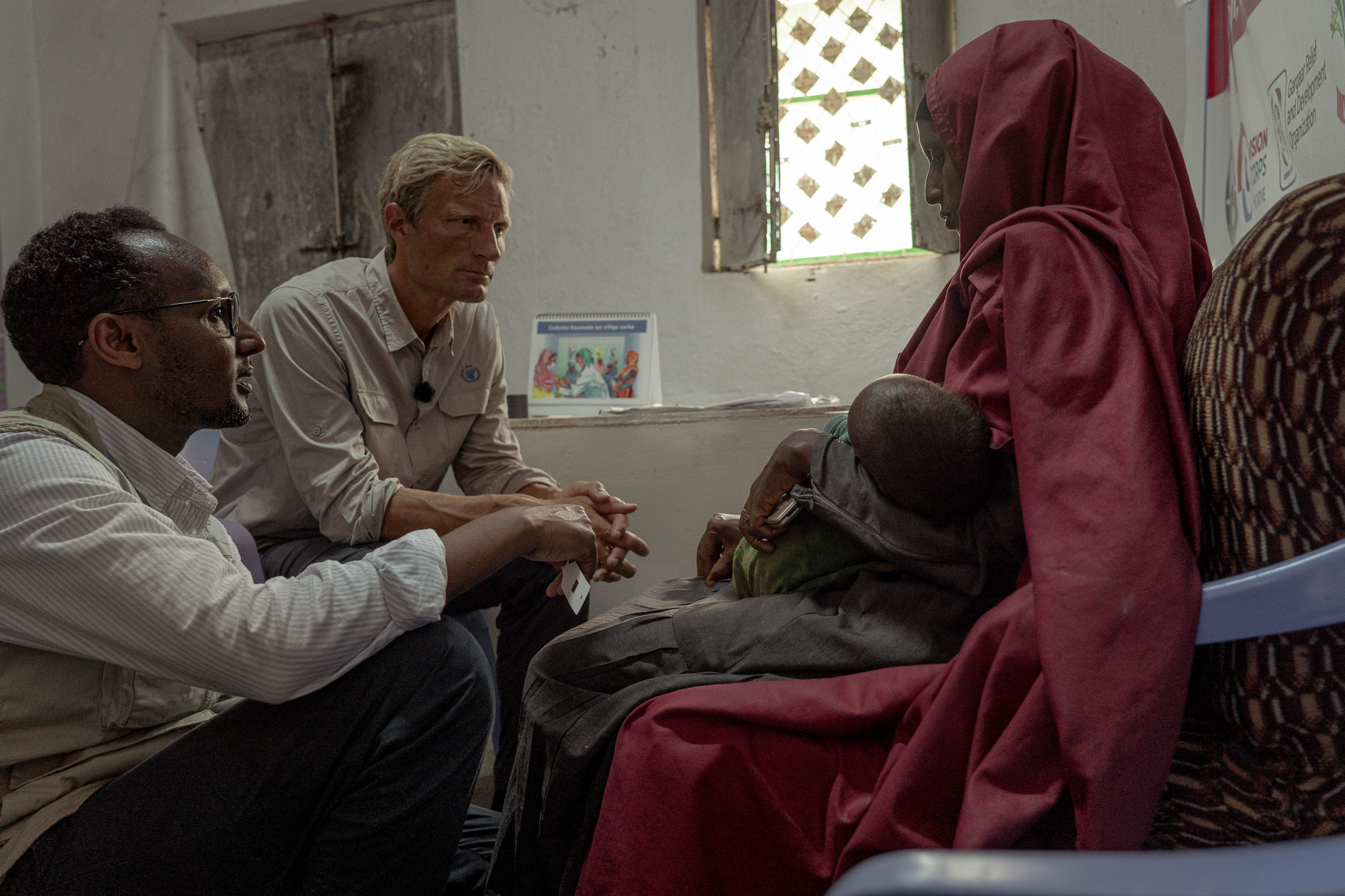
MOGADISHU, Somalia — The acting head of the World Food Programme visited Burhakaba this week, drawing attention to a worsening hunger and malnutrition crisis in one of Somalia’s most vulnerable areas as humanitarian agencies warn that famine could return if conditions deteriorate further.
Carl Skau, acting executive director of the WFP, visited communities in Burhakaba, in Somalia’s Bay region, where prolonged drought, insecurity, high food prices and limited humanitarian assistance have pushed families deeper into crisis.
Nearly 40 percent of children under 5 in Burhakaba are already acutely malnourished, according to a joint assessment by U.N. agencies. The area is also among those facing a risk of famine under a worst-case scenario involving continued poor rainfall, rising food prices and insufficient humanitarian assistance.
The warning comes as the scale of Somalia’s broader food crisis grows. About 6 million people are facing acute food insecurity, while nearly 1.9 million children under 5 are projected to experience acute malnutrition this year, according to the WFP. Almost 500,000 children are expected to require treatment for severe acute malnutrition.
Aid shortfall raises the stakes
The WFP has warned that its ability to respond is being severely constrained by a shortage of funding.
Skau said the agency now has only about a tenth of the resources it had during Somalia’s 2022 drought emergency, when a large-scale international response helped prevent famine.
“We know what’s going on, we have the capacity, we have the experience of dealing with this,” Skau said during his visit. “We just need the resources now to do it.”
The funding reductions have forced humanitarian agencies to concentrate assistance on people facing the most severe conditions rather than expanding programmes to cover the growing number of vulnerable households.
The crisis is being driven by several overlapping shocks. Drought has damaged crops and livestock, while conflict and displacement have disrupted livelihoods and restricted access to food and humanitarian services. Rising fuel and food costs have further weakened household purchasing power.
Burhakaba at the center of the warning
Burhakaba has emerged as one of the clearest indicators of the deterioration.
The U.N. agencies said populations dependent on agriculture and livestock in Burhakaba and surrounding areas could face famine if rainfall fails, food prices continue to rise and humanitarian assistance is not substantially increased.
The current warning is particularly significant because it marks the first famine-risk analysis for Somalia since the country’s devastating 2022 crisis. Famine was ultimately avoided that year after international donors dramatically expanded humanitarian assistance.
For families in Burhakaba, the effects are already visible in shrinking food supplies, lost livelihoods and increasing numbers of malnourished children.
The WFP visit was intended to highlight those conditions at a time when humanitarian agencies are warning that the window to prevent a deeper catastrophe is narrowing.
Somalia’s crisis remains preventable, aid agencies say, but the response depends increasingly on whether sufficient funding reaches communities before worsening hunger and malnutrition become irreversible.


