
MOGADISHU, Somalia — Somalia’s opposition has blamed the federal government for the violence that erupted in Baidoa this week, warning that the use of force to settle political disputes risks deepening divisions in a country already facing a severe security and humanitarian crisis.
The fighting on Monday pitted federal government forces against militias linked to Abdiaziz Hassan Mohamed Laftagareen, the former president of South West State. Federal troops said they had pushed the opposition fighters out of the city after an assault on government positions. Reuters reported that the government said about 30 opposition fighters were killed.
The violence left civilians among the casualties. A hospital official told The Associated Press that at least four civilians were killed and 98 people wounded, while dozens of combatants were also reported dead. Baidoa, the interim capital of South West State, is home to more than half a million people displaced by conflict and drought.
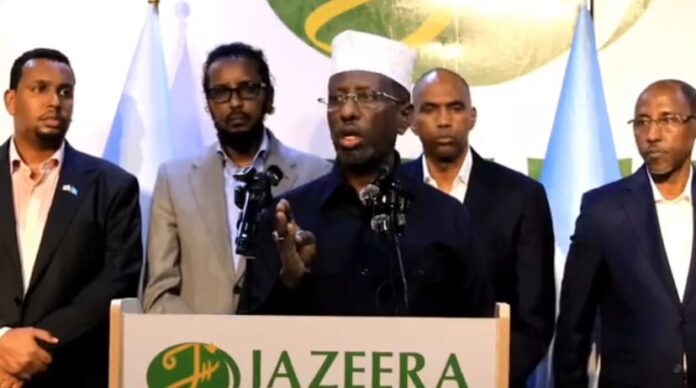
Former President Sharif Sheikh Ahmed, a leading opposition figure, has accused the federal government of politicising state power and using force to impose political change. He said violence should not become an instrument of governance and called for an inclusive political settlement, national reconciliation and an agreed electoral process.
Mr. Sharif has urged political change through dialogue and consensus rather than military confrontation, warning that continued fighting could push Somalia toward greater fragmentation.
The clashes are the latest manifestation of a broader dispute between the federal government and regional political leaders over the distribution of power, constitutional changes and the electoral process. Somalia’s Parliament and presidency faced the end of their mandates earlier this year, while disagreement over the electoral system remained unresolved. Constitutional changes subsequently extended the federal government’s mandate by a year, a move rejected by opposition groups.
The crisis has also reshaped the political landscape in South West State. Federal forces moved into Baidoa in March after relations between the central government and Mr. Laftagareen deteriorated. The federal government subsequently established an interim administration, intensifying the dispute over who should control the region and oversee its political transition.
The latest fighting comes as Somalia continues its campaign against Al-Shabaab, the armed group that controls parts of the country and has repeatedly exploited political and security divisions. The simultaneous instability has raised concerns that renewed confrontation among political actors could create opportunities for the armed group to expand its influence.
For Mr. Sharif and other opposition leaders, the immediate challenge is to prevent the political dispute from becoming another armed conflict.
They have called for the government and opposition to return to negotiations, agree on an electoral framework and pursue a national reconciliation process — measures they say are necessary to prevent Somalia’s political crisis from becoming a deeper conflict over control of the state.