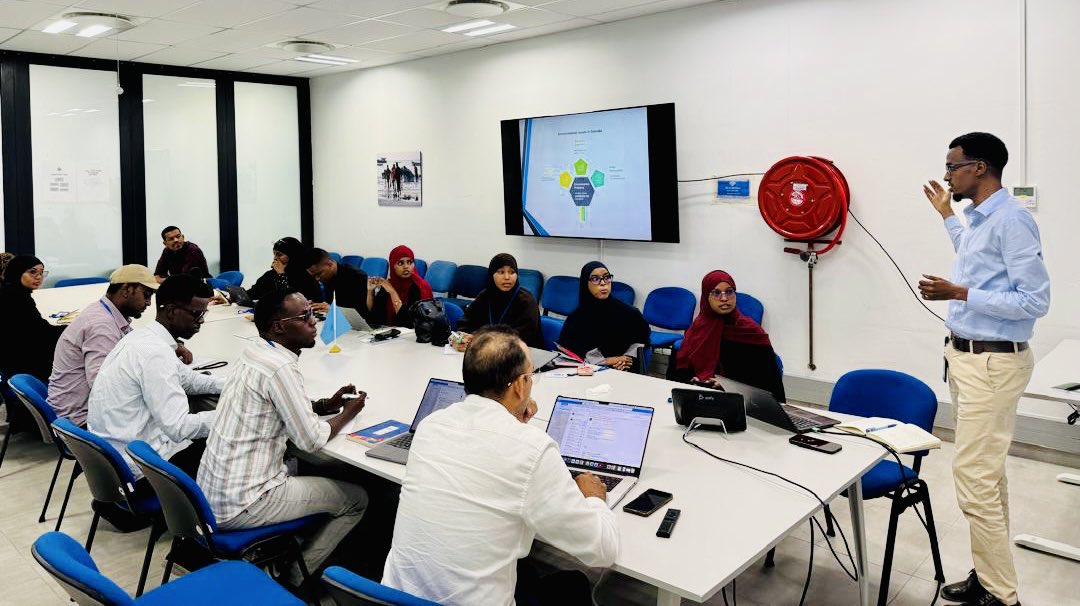
MOGADISHU, Somalia – Somali journalists from across the country gathered in the capital, Mogadishu, on Monday for a training workshop led by the United Nations Development Programme (UNDP), aimed at strengthening local media coverage of the climate crisis and its growing impact on communities.
The one-day session focused on building journalists’ capacity to tell in-depth, evidence-based stories that link global climate shifts to the realities facing Somali families — from prolonged droughts and failed harvests to flash floods and food insecurity.
Participants described the training as timely, with Somalia among the countries hardest hit by extreme weather linked to climate change. The discussions also explored how media narratives can drive public awareness, government accountability, and local resilience.


Among those who took part were Aamina Ibrahim Abdirahman, deputy director of Arlaadi Media Network, and Omar Abdikadir Mohamed, the outlet’s climate correspondent. Both hailed the initiative as a milestone in empowering journalists to shape informed debate around environmental issues.
“This workshop gives Somali journalists the tools to connect climate science with the lived experiences of our people,” said Abdirahman. “It’s an important step toward building a media culture that promotes climate action.”
The training forms part of UNDP Somalia’s broader push to engage the media as partners in advancing climate awareness ahead of the UN Climate Summit (COP30), scheduled for November 2025 in Brazil.
As Somalia continues to recover from years of drought and displacement, participants said they hoped the initiative would inspire stronger storytelling around adaptation, community solutions, and the human dimension of the climate emergency.