
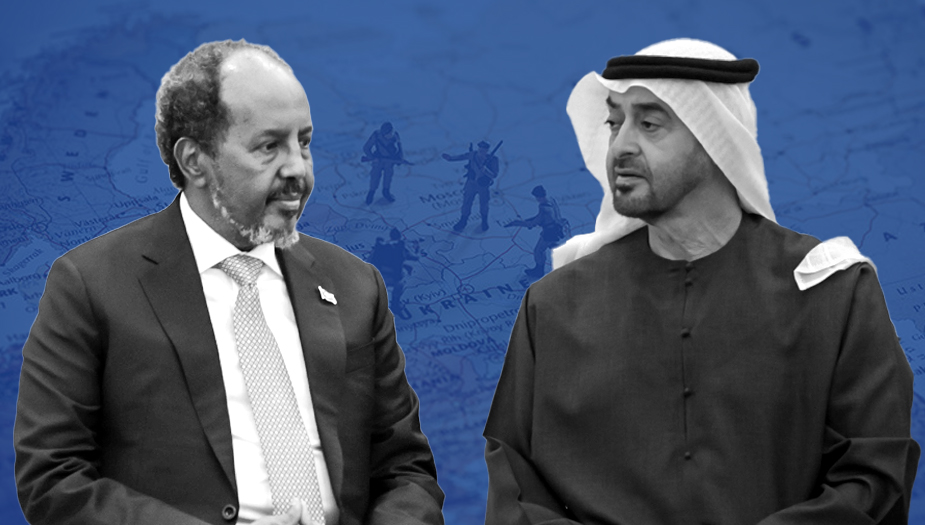
MOGADISHU, Somalia – Somalia isn’t just cancelling deals with the UAE — it’s ripping up decades of fragile diplomacy, inflaming regional fault lines and placing itself at the centre of a geopolitical storm that stretches from the Red Sea to the Gulf. In a stunning January 12, 2026 emergency Cabinet decision, Mogadishu annulled all security, defence and port agreements with the United Arab Emirates, accusing Abu Dhabi of actions that “undermine Somalia’s sovereignty, national unity and political independence.”
The decree also nullifies cooperation at strategic hubs including Berbera, Bosaso and Kismayo — ports that have long been at the heart of contention over foreign influence and federal authority.
The immediate spark for this rupture is the explosive fallout from Israel’s December 26 recognition of Somaliland as an independent state, the first time any UN member has done so, followed by a high-profile visit to Hargeisa by Israeli Foreign Minister Gideon Saar. Somalia erupted in protests and condemnation, with hundreds rallying in Mogadishu to denounce the move as a blatant assault on its unity and territorial integrity. National and international bodies, including the African Union, have since demanded Israel retract the recognition, labelling Somaliland a “so-called” republic.
Mogadishu’s decision reflects deeper, simmering distrust towards the UAE’s footprint in the Horn of Africa. This crisis did not begin in 2026 — it has roots stretching back years. In 2018, relations bottomed out when Somali security forces seized three suitcases containing more than $9m from a UAE Royal Jet at Mogadishu’s airport, accusing Abu Dhabi of funding opposition forces; the UAE retaliated by closing its military training facility and a humanitarian hospital in the capital.
Since then, the UAE’s direct deals with semi-autonomous Somali regions — particularly Somaliland, Jubaland and Puntland — have fuelled constant friction. Abu Dhabi invested heavily in Somaliland’s deep-water port at Berbera, fostering close ties with Hargeisa officials, often bypassing Mogadishu. These arrangements have been seen in Somalia’s federal capital as deliberate attempts to erode central authority and split the nation along regional lines.
Tensions escalated further in recent days with accusations from Saudi Arabia that the UAE helped Yemen’s Southern Transitional Council leader, Aidarous al-Zubaidi, evade Saudi custody by flying him via Somaliland and Somalia to Abu Dhabi — a claim that has deepened mistrust not only between Mogadishu and Abu Dhabi but also between the Gulf partners themselves.
Within Somalia, reactions to the government’s break with the UAE are not uniform. Puntland, Jubaland and Somaliland, states with historically closer ties to the Gulf nation, have signalled resistance to Mogadishu’s sweeping cancellations — raising the spectre that the federal edict may not be fully enforced across the federated system. Analysts warn that this could weaken central authority and embolden power brokers who see foreign backing as leverage against Mogadishu.
The Israel–Somaliland recognition has added combustible fuel to the fire. Many Somali officials believe the UAE quietly facilitated the rapprochement between Tel Aviv and Hargeisa, using its role under the Abraham Accords to draw Israel into the Horn — a strategic gamble that Mogadishu interprets as a security threat and a bid to carve out a pro-Western foothold on the Red Sea.
This geopolitical tug-of-war comes at a time when the Horn is already a theatre for rival interests — from Red Sea maritime security to Yemeni civil war spill-overs — and Somalia’s dramatic rejection of the UAE reflects a broader nationalist backlash against external interference.
Critics of Mogadishu’s manoeuvre warn it could further destabilise a country still rebuilding after decades of conflict, but supporters argue it’s a long-overdue assertion of sovereign authority in a region where foreign powers have often operated with impunity. In the coming weeks, how Abu Dhabi responds, whether Puntland resists federal orders, and how Mogadishu navigates the diplomatic fallout with both Gulf capitals and Western partners could determine whether this rupture becomes a defining moment in the Horn — or the prelude to even deeper fragmentation.