

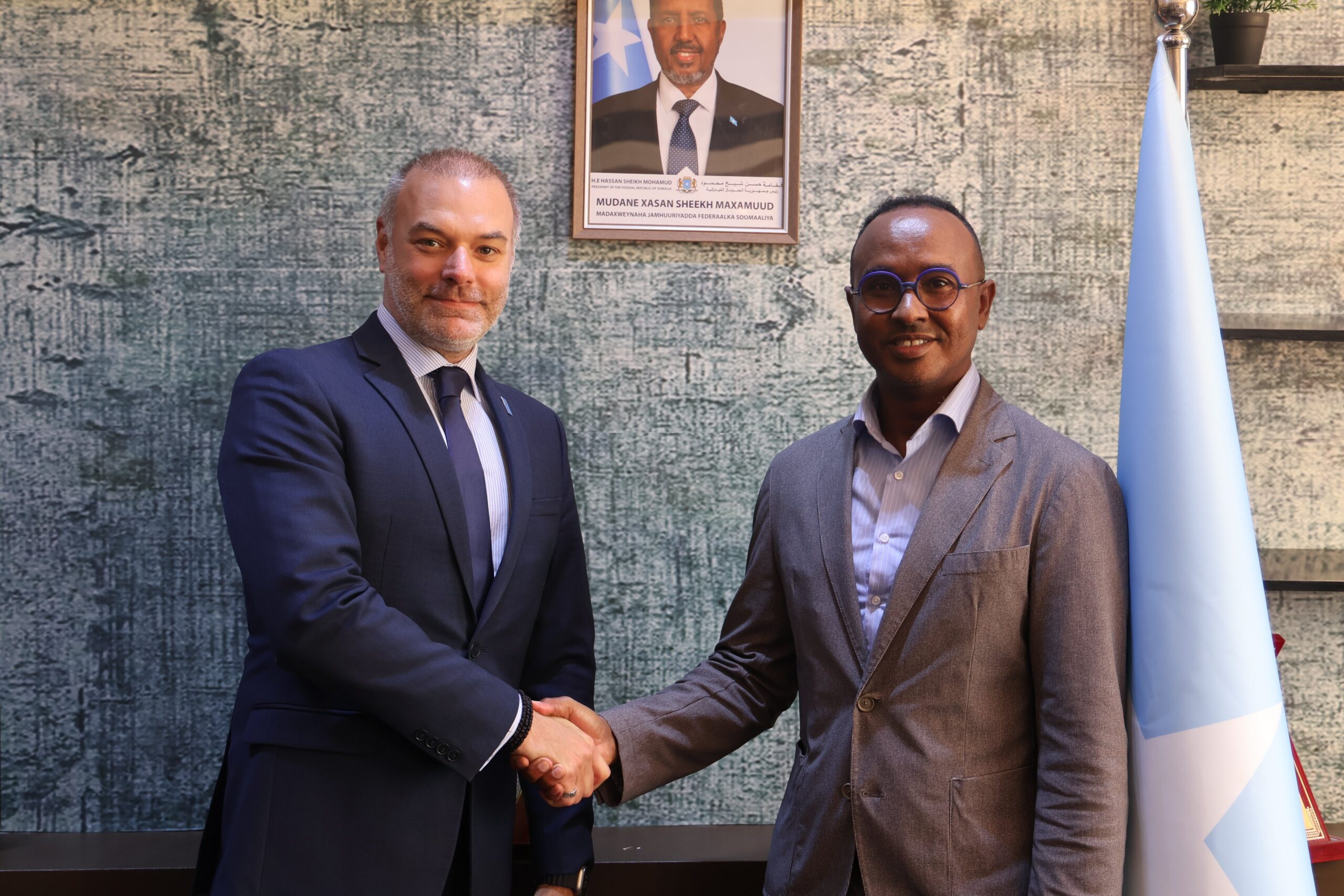
MOGADISHU, Somalia, — Somalia’s disaster management agency and the United Nations Development Programme discussed humanitarian needs and preparations for the expected impact of El Niño during talks in Mogadishu, as the country braces for potentially heavy rains, flooding and further displacement.
Mahmoud Moallin Abdulle, head of Somalia’s Disaster Management Agency (SoDMA), met with Chris Politis, the newly appointed UNDP representative in Somalia, to discuss disaster preparedness, humanitarian assistance and the anticipated effects of El Niño.
Politis praised SoDMA’s response efforts and reaffirmed UNDP’s commitment to supporting Somalia’s emergency preparedness and humanitarian response, according to the agency.
The meeting comes as Somalia prepares for an anticipated El Niño weather pattern that could bring heavy rainfall and increase the risk of flooding later this year. The government and humanitarian agencies have been working on contingency planning, early-warning systems and the pre-positioning of emergency supplies.
Somalia is particularly vulnerable to climate shocks after years of drought, flooding and conflict have weakened livelihoods and displaced large numbers of people. In 2023, floods associated with El Niño affected communities across the country and displaced about 2.3 million people, providing a major warning for current preparedness efforts.
The latest preparations are unfolding alongside a severe humanitarian crisis. U.N. agencies and the Somali government have warned that about 6.5 million people face acute food insecurity, while roughly 1.9 million children are expected to experience acute malnutrition in 2026.
Aid agencies are also facing significant funding constraints, limiting their ability to expand food, nutrition, water and other emergency programmes as needs increase.
For SoDMA and its international partners, the priority is to strengthen preparedness before heavy rains arrive rather than relying primarily on emergency response after disasters occur.
The discussions with UNDP form part of a broader effort to improve coordination between Somalia’s government and international partners, strengthen early-warning capacity and reduce the humanitarian impact of climate-related disasters.
With Somalia already confronting drought, food insecurity and displacement, officials face the challenge of preparing for a possible shift from severe water shortages to flooding — potentially creating another layer of humanitarian pressure before communities have recovered from the current crisis.


