
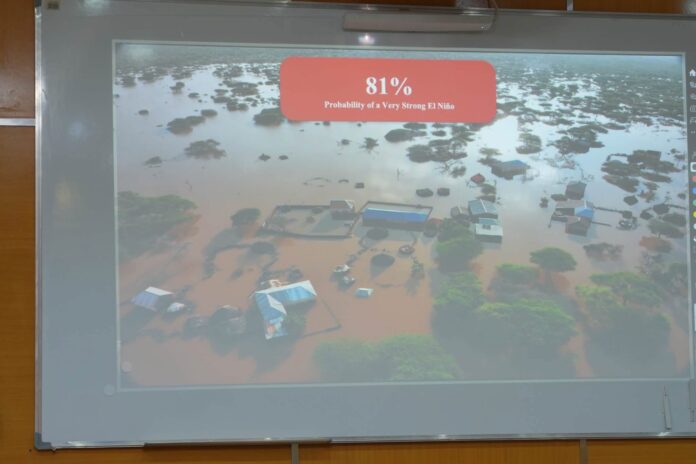
GAROWE, Somalia — Puntland Vice President Ilyas Osman Lugatoor on Wednesday chaired a ministerial meeting in Garowe to discuss preparations for forecast El Niño-related rainfall and potential flooding, as Somalia faces heightened climate risks during the October–December rainy season.
The meeting focused on strengthening coordination among government institutions, improving the timely sharing of weather information and expanding public awareness campaigns to protect lives and property, particularly in communities vulnerable to flooding.
Officials also discussed emergency preparedness, monitoring weather forecasts and developing response plans to mitigate the potential impact of heavy rainfall and water accumulation, local media reported on Wednesday.
The meeting comes amid warnings from climate and humanitarian agencies that strengthening El Niño conditions could increase the risk of severe flooding across Somalia during the Deyr rainy season.
According to the Food and Agriculture Organization of the United Nations (FAO), the latest seasonal outlook indicates a strong likelihood of above-normal rainfall across much of the country. The agency has warned that excessive rainfall could trigger flooding, damage infrastructure, disrupt livelihoods and displace vulnerable communities.
Puntland’s Information Management Centre for Water and Land Resources reported in September that central parts of the region, including Garowe, Gaalkacyo and Qardho, had a 65% probability of receiving above-normal rainfall during the October–December season.
The centre has emphasized early warning systems, community preparedness and the protection of water sources, livestock and essential services as key priorities ahead of the rains.
Puntland has also taken steps to improve its urban drainage infrastructure. On Sept. 28, Lugatoor inaugurated the first phase of the Nagaad drainage project in Garowe, an initiative intended to improve rainwater management and reduce urban flooding.
The latest preparations come as Somalia continues to face humanitarian pressures linked to recurring drought, food insecurity and displacement. Heavy rainfall following periods of drought can create additional risks for communities with limited infrastructure and resources.
The FAO has stressed that seasonal forecasts do not mean flooding is inevitable, but warned that early action, effective coordination and timely dissemination of weather alerts will be critical to reducing potential losses.
Authorities and humanitarian partners are expected to continue monitoring rainfall forecasts and flood risks as the Deyr season progresses, with particular attention to vulnerable communities and areas prone to water accumulation.