

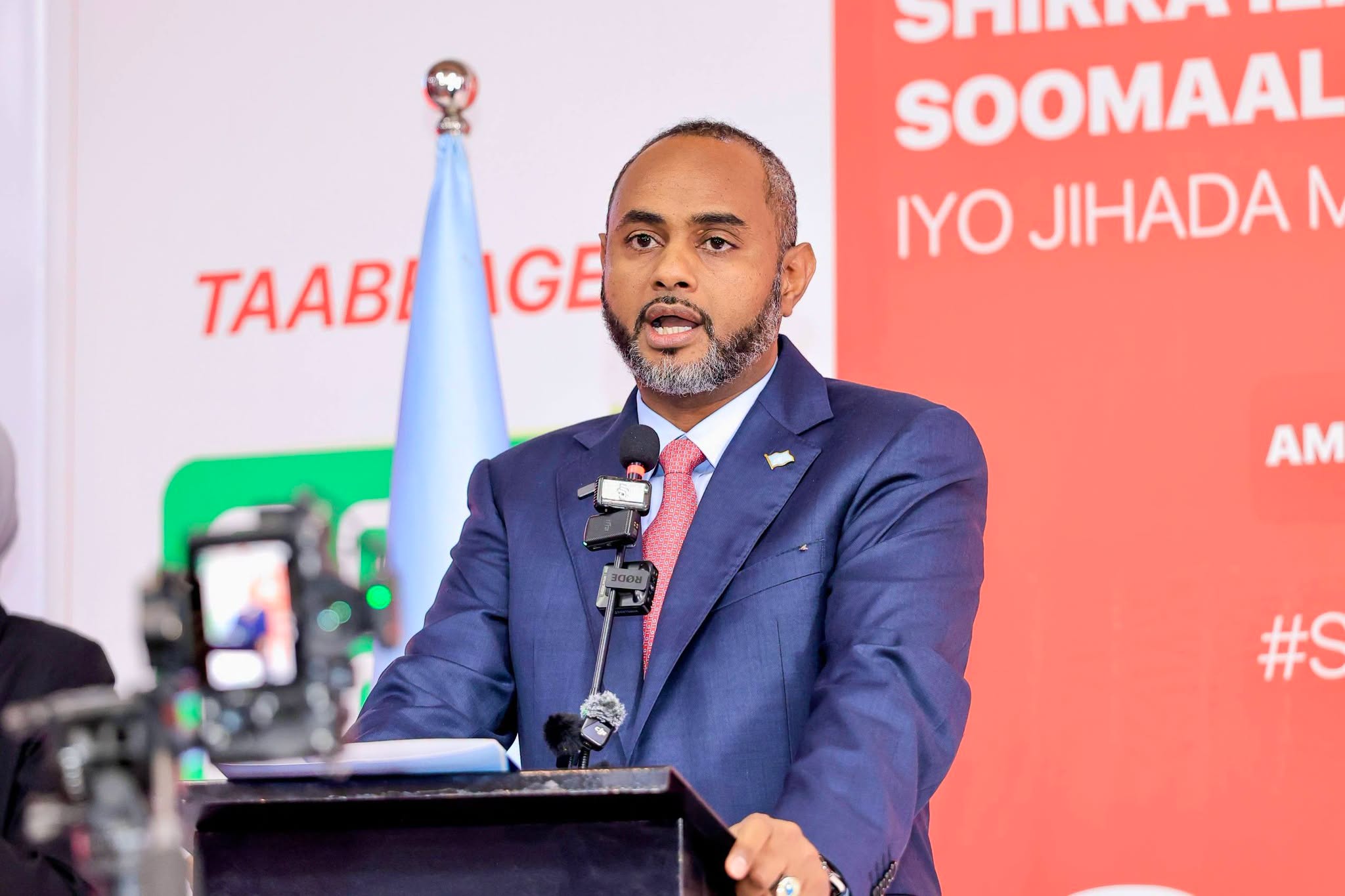
MOGADISHU, Somalia — Somalia’s parliamentary speaker has accused al-Shabaab, Israel and the United Arab Emirates of involvement in activities he said threaten the country’s sovereignty, while urging greater economic self-reliance to reduce Somalia’s vulnerability to external shocks.
Abdiqadir Mohamed Nur, commonly known as Jaamac, made the remarks while closing a conference on Somalia’s productive resources organised by Magan Forum. He also rejected opposition claims that the mandates of federal institutions had expired, insisting that parliament and the federal government would continue exercising their responsibilities.
In his address, Nur said Somalia’s economic future depended on making better use of its natural resources and strengthening domestic production rather than relying heavily on imported goods.
He identified agriculture, livestock, fisheries, manufacturing, handicrafts and mineral extraction as sectors with the potential to generate employment, expand local businesses and improve living standards.
The speaker argued that economic development would require more than access to natural resources. He called for stronger security, specialised education and vocational training, reforms to the legal and financial systems, and investment in infrastructure, including ports, airports, roads and affordable energy.
He also urged the government to attract foreign investment while creating better conditions for Somali businesses to expand production and compete in domestic markets.
Economic dependence and national security
Nur warned that Somalia’s dependence on imported goods and maritime trade routes could expose the country to serious economic disruption if regional or international conflicts affected shipping lanes and global commerce.
He said the country needed to prepare for such risks by strengthening local industries, developing domestic supply chains and encouraging consumers to support Somali-made products.
The speaker also raised concerns about imported goods that he said could pose health risks, arguing that greater investment in local production would help protect consumers while supporting the national economy.
He described security as a prerequisite for sustainable economic development, saying the country needed to eliminate al-Shabaab’s threat to create an environment conducive to investment and production.
Political tensions
The speaker’s remarks also touched on Somalia’s ongoing political disagreements. He rejected opposition assertions that the mandates of federal institutions had expired, maintaining that the federal parliament and government would continue operating.
The dispute comes amid broader disagreements over Somalia’s constitutional arrangements, electoral process and the legitimacy of federal institutions.
Nur further accused al-Shabaab, Israel and the UAE of cooperating in activities that threaten Somalia’s sovereignty.
He said the House of the People would work with the federal government, relevant ministries and state institutions to assess the economic and security risks facing the country and develop measures to address them. The conference focused on how Somalia could harness its natural resources, expand domestic production and translate its economic potential into sustainable development.


