
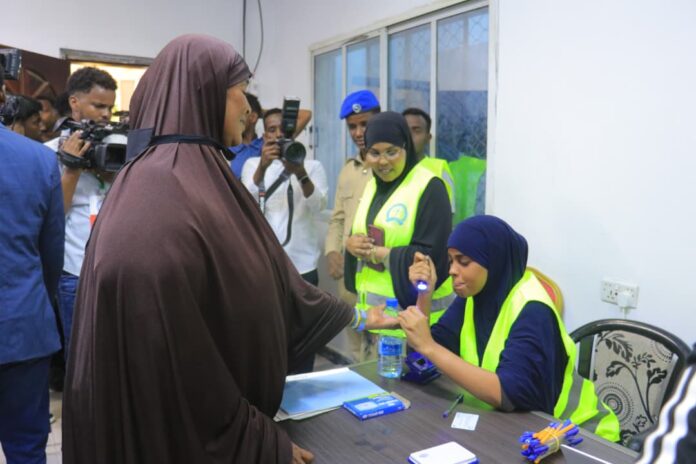
MOGADISHU, Somalia — Residents of Somali capital Mogadishu went to the polls on Thursday for local council elections covering 16 districts, in what authorities described as a major step toward decentralised governance, Arlaadi Media Network reports.
The vote, organised by the National Independent Electoral Commission (NIEC), involved candidates from around 20 political parties.
While councillors will select district commissioners, the mayor of Banadir remains appointed, pending resolution of the city’s constitutional status amid ongoing political disagreements.
More than 500 polling stations opened across the Somali capital, with NIEC chair Abdikarim Ahmed Hassan describing the elections as “a milestone for local governance and democratic participation.” He urged citizens to turn out and choose representatives for their communities.
President Hassan Sheikh Mohamud called the elections “a historic milestone,” framing them as evidence of “renewed statehood and improved security” in Mogadishu.
In a televised address on Wednesday evening, he emphasised the importance of one-person-one-vote elections in strengthening democratic institutions, a goal delayed for decades due to civil war and political instability.
Somalia has struggled for years to establish credible elections, relying instead on indirect, clan-based voting systems. The capital has never held a fully direct, citywide election, and disputes over its governance have persisted, with the federal government and regional administrations failing to agree on Banadir’s constitutional status. Thursday’s vote was therefore seen as both a symbolic and procedural milestone for Somalia’s fragile electoral framework.
However, the elections have faced strong opposition. The Somali Salvation Forum and former Prime Minister Hassan Ali Khaire accused the government of manipulating the process in favour of the ruling party, announcing a boycott.
“The process is engineered to benefit a single party, undermining democratic credibility and threatening political stability,” Khaire said.
Several opposition parties argued that the elections were rushed and lacked transparency, and they also raised concerns over the absence of confirmed international observers, traditionally considered essential for ensuring fairness in Somalia’s fragile political context.
Analysts say Thursday’s elections highlight both progress and ongoing challenges for Somalia’s political system.
While local council elections mark a procedural step toward decentralisation and citizen participation, the opposition boycott and unresolved questions over Mogadishu’s governance structure could undermine the perceived legitimacy of the vote.
Political tensions may persist, particularly if disputes over election results emerge or if the federal government and opposition fail to reach consensus on key appointments.
As polling stations closed on Thursday, Mogadishu found itself at a crossroads: attempting to demonstrate democratic progress while navigating the political fragility and long-standing governance disputes that have long characterised Somalia’s capital.