MOGADISHU, Somalia – The United Arab Emirates and Sudan appear to have opened parallel diplomatic channels with Somalia, seeking Mogadishu’s support ahead of the 80th session of the United Nations General Assembly, which begins on September 9.
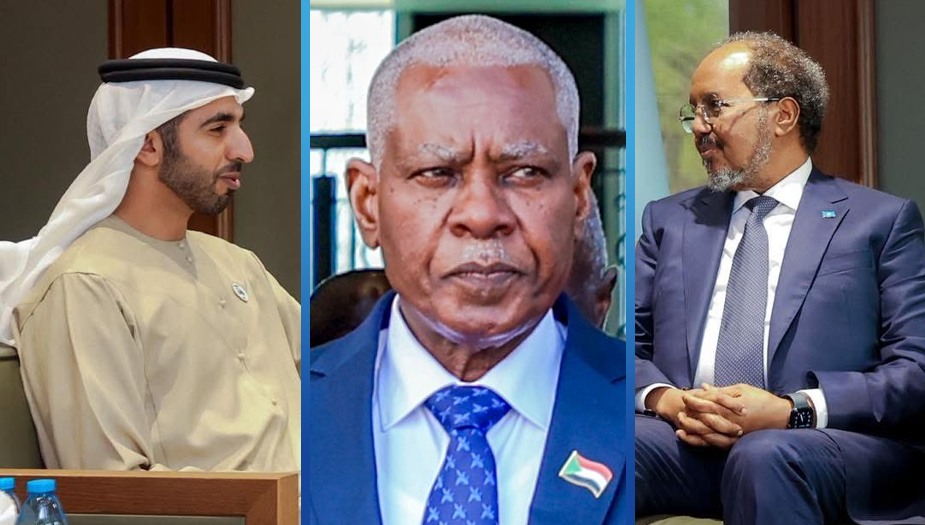
On Wednesday, Somali President Hassan Sheikh Mohamud received messages from both UAE President Sheikh Mohamed bin Zayed and Sudan’s Sovereignty Council leader, General Abdel Fattah al-Burhan. The outreach comes amid intensifying rivalries in the Horn of Africa, where regional alliances are shifting rapidly.
A Surprise Visit from Abu Dhabi
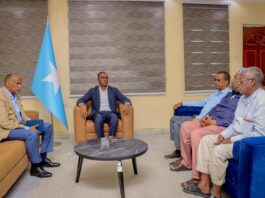
In a move that caught many observers off guard, Sheikh Shakhbout bin Nahyan, the UAE’s Minister of State for Foreign Affairs, flew into Mogadishu unannounced on Wednesday afternoon. He delivered a letter from President bin Zayed and held what sources described as “extensive talks” with President Mohamud.
“The President appreciated the United Arab Emirates’ support and reaffirmed Somalia’s commitment to cooperation and development,” Villa Somalia said in a carefully worded statement. No further details were provided.
Analysts note that Abu Dhabi’s sudden engagement highlights the UAE’s desire to cement its role in Somali politics, particularly as tensions with Sudan continue to escalate.
Khartoum Sends Its Spy Chief
Just 24 hours earlier, Lieutenant General Ahmed Ibrahim Ali Mufaddal, Sudan’s powerful intelligence chief, landed in Mogadishu. He too met President Mohamud, carrying a personal message from al-Burhan.
Talks reportedly focused on bolstering bilateral ties across security and economic sectors. The Somali presidency confirmed the meeting but, much like with the UAE delegation, released few specifics about the content of the discussions.
So far, Somali officials have avoided public comment on whether the two visits are linked—or how Mogadishu plans to navigate the competing pressures.
Why Somalia Matters Now
Somalia has found itself in an increasingly delicate position as regional rivalries intensify. In May this year, Mogadishu strongly condemned attacks by Sudan’s Rapid Support Forces (RSF) on civilian targets in Kassala and Port Sudan, describing them as “a dangerous escalation that breaches international standards.”
That stance was seen as aligning Somalia closer to Khartoum’s adversaries—among them the UAE, which has been accused of backing the RSF. The latest visits suggest both Sudan and the UAE are eager to recalibrate their influence in Mogadishu before world leaders convene in New York.
But with the United Nations General Assembly looming, and with Somali federal government seeking greater international backing for investment, security funding, and state-building, analysts say President Mohamud’s balancing act could prove pivotal.