

By Abdirahman Jeylani
MOGADISHU, Somalia – Somalia stands at a precarious crossroads. In the arid plains and rugged hinterlands of Gedo, a region long relegated to the periphery of national attention, a simmering dispute between the federal government in Mogadishu and the semi-autonomous Jubaland administration threatens to metamorphose into a full-blown confrontation.
What unfolds in Gedo is more than a struggle over local governance; it is a crucible in which Somalia’s federal experiment may be tested, with consequences that could reverberate across the country’s political and security landscape.
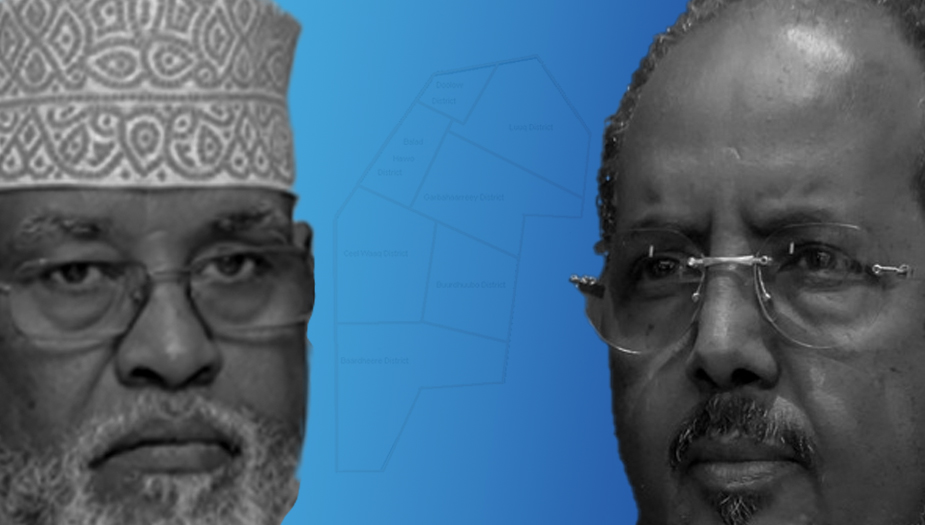
Jubaland President Ahmed Madobe and his parliamentary allies have vociferously accused President Hassan Sheikh Mohamud’s administration of persistent “illegal interference” in their affairs. According to Madobe’s camp, federal attempts to establish a “new state” in Gedo constitute an existential threat to Jubaland’s autonomy, fomenting clan animosities and encouraging parallel administrations—all while diverting resources from the ongoing fight against Al-Shabaab. “Continued meddling risks igniting violence and displacing civilians,” warn Jubaland MPs, their words weighted with the memory of past unrest.
The Fragile Legacy of Failed Talks
From Mogadishu, the federal government asserts that its initiatives are a necessary “reform campaign,” intended to strengthen governance and ensure national cohesion. State Minister for Defence Omar Gamaar has publicly castigated Madobe, branding him a “dictator” and accusing him of turning Gedo into a “political buffer zone” to obstruct reforms. The rhetoric is stark, uncompromising, and emblematic of the deep fissures now dominating Somalia’s political discourse.
Earlier this week, talks between Mohamud and Madobe in Kismayo concluded on a tense note, yielding no substantive breakthroughs. Each leader issued statements that conspicuously omitted the other’s name, signaling lingering animosity. Kenya played a key role in brokering the discussions, with Madobe publicly thanking Nairobi for its mediation.
Yet the fundamental impasse remains: the federal government refuses to recognize Madobe’s re-election last November, while Madobe has offered to compromise on other institutional reforms, including holding popular elections for federal institutions, if his mandate is acknowledged.
Gedo: A Potential Battlefield
Gedo is more than a provincial stage for bureaucratic disputes—it is a potential flashpoint for renewed armed conflict. Analysts warn that if tensions escalate into violence, a second wave of conflict in Gedo could be exploited by Al-Shabaab, providing the militant group with a strategic advantage and undermining Somalia’s counterterrorism efforts.
Moreover, such instability could imperil Somalia’s already fragile electoral calendar: the 2026 elections are under dispute regarding their format, and renewed clashes in Gedo risk delaying preparations, further fracturing the nation’s political cohesion.
Compounding the crisis is the intensifying media war between the federal and Jubaland administrations. Both sides have mobilized powerful narrative campaigns to sway public perception, framing the dispute in starkly different terms: Mogadishu positions itself as the guardian of national reform and unity, while Jubaland portrays itself as the bulwark of regional sovereignty and a victim of federal overreach. These competing narratives amplify tensions, inflame public sentiment, and create fertile ground for miscalculations that could escalate the conflict.
The Imperative for Prudence
The standoff in Gedo underscores the fragility of Somalia’s federal architecture and the existential stakes of unresolved political disputes. Without careful negotiation and a genuine commitment to dialogue, the region risks descending into chaos, compromising not only Jubaland’s stability but the broader federal project, the electoral process, and national security.
Somalia’s leaders must transcend entrenched rivalries and employ both political ingenuity and moral courage. Incremental reforms should be pursued with sensitivity to regional autonomy, legitimacy disputes must be addressed, and public discourse should favor reconciliation over confrontation. Gedo is no longer a silent observer of Somalia’s turbulent politics—it is a crucible whose fate will profoundly shape the country’s trajectory.
In Gedo, the lines are drawn—not merely between political offices, but between competing visions of Somalia itself. Will the nation navigate this crisis with prudence, or will Gedo become the ignition point for renewed violence, electoral delay, and empowerment of extremist actors? The answer, ultimately, will be written in the sands and settlements of Gedo, with consequences far beyond its borders.
The author is Abdirahman Jeylani Mohamed, the General Director of Arlaadi Media Network, foreign policy journalist and communications specialist.


