

By Mohamed Adil
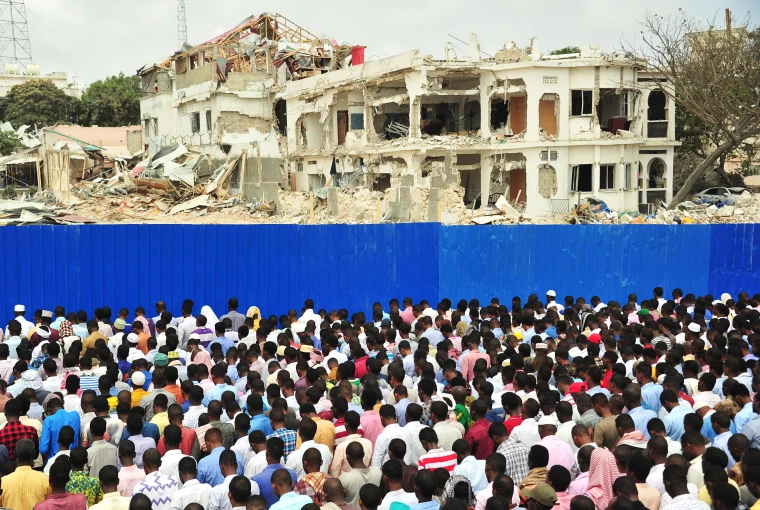
On the evening of 14 October 2017, Mogadishu burned. A truck packed with explosives tore through the heart of the Somali capital, exploding near the K5 junction — one of the busiest areas of the city.
Within seconds, streets filled with life turned into a field of death and fire. More than 587 people were killed, hundreds more wounded, and families shattered beyond recognition.
It was — and remains — the deadliest terrorist attack in Africa’s modern history. Eight years on, Somalia still bears the wound. Deep. Visible. Unhealed.
A Nation Fractured, a City That Refused to Fall
Before that day, Mogadishu was learning to breathe again. After decades of war and displacement, signs of normalcy had begun to bloom: cafés, new roads, and a fragile sense of peace. Then, in one violent instant, that hope was torn apart.
The explosion at Zobe Junction — believed to have been orchestrated by Al-Shabab — was not just an attack on civilians. It was a calculated strike at the soul of a city trying to recover.
Yet amid the smoke and screams, the world saw something else: the courage of ordinary people. Taxi drivers became ambulances. Students carried the wounded in their arms. Nurses worked through the night without power or supplies. Mogadishu — wounded but defiant — refused to collapse.
Zobe: From Rubble to Resilience
Eight years later, Zobe Junction stands rebuilt. What was once a scene of devastation is now a living monument — a place where remembrance and resilience coexist.
Each year on October 14, citizens gather to honor those lost. The day has become Somalia’s National Day of Remembrance, a collective moment of grief and resolve. Wreaths are laid. Prayers are recited. And yet, behind the solemn ceremonies, an ache remains.
Many survivors say remembrance without justice is hollow. “Memorials are not enough if the same systems that failed us remain,” says Fartun Abdi, a nurse who lost her brother in the bombing. “We honor the dead by protecting the living.”
Her words cut deep — because she’s right. The 14 October attack was not only a tragedy but a reflection of systemic failures: corruption, weak security oversight, and a lack of intelligence coordination. Eight years later, those gaps persist.
To truly honor the victims, Somalia must confront the flaws that allowed such horror to unfold.
The Weight of Memory
Commemorations are not just rituals — they are moral obligations. They force us to remember what we lost, and what we risk losing again.
But remembering is also political. It asks uncomfortable questions: Why are Somali lives so easily forgotten by the world? Why does global outrage fade faster when the victims are African, Muslim, and unnamed?
When Paris, London, or New York are attacked, the world grieves together. When Mogadishu bleeds, the silence is deafening.
Yet Mogadishu refuses to be silent. The pain has become a platform for purpose. Young activists have transformed #14OctoberNeverForget into a movement for civic action — demanding better governance, better security, and dignity for every Somali life.
It is no longer just about mourning the dead; it’s about reclaiming the right to live.
A Generation Rising from the Ashes
The children of 2017 are now the youth of 2025. They carry the memory of that day not as victims, but as visionaries.
Across universities, art collectives, and online forums, young Somalis are turning trauma into expression. Poems, documentaries, and songs born out of grief have become the cultural heartbeat of a generation that refuses to forget.
One poem, recited annually at the memorial, captures it best:
“We are not the ruins — we are the hands that rebuild them.
We are not the smoke — we are the wind that clears it.”
From that spirit, a new Mogadishu is emerging — imperfect, fragile, but full of will.
Eight Years Later: The Work of the Living
The government holds annual vigils. Streets bear the names of victims. International partners send messages of solidarity. But remembrance alone is not enough.
Somalia must do what the bombers feared most — build a state that protects its people, values its dead, and confronts the machinery of violence that still stalks its land.
Accountability must replace apathy. Action must replace pity. Justice must replace memory alone.
Epilogue: The City That Still Breathes
At Zobe Junction today, a circular stone memorial stands — etched with the names of those who could be identified. Nearby, tea vendors call out to customers, and buses rumble past. Life continues, defiantly.
Every October, as the sun sets over Mogadishu, the city glows with candlelight. The flames flicker not in despair, but in determination — reminders that no act of terror can extinguish the Somali spirit.
Eight years after the horror, Mogadishu still stands. Bruised. Beautiful. Unbreakable. The blast that tried to silence the city only amplified its defiance. The wound still aches, but from it grows an unshakable truth: Mogadishu will not be forgotten — and neither will its people.
Disclaimer: The views expressed in this article are those of the author and do not necessarily reflect the editorial policy or position of Arlaadi Media Network.


