

By Hanad Mohamed Hussein
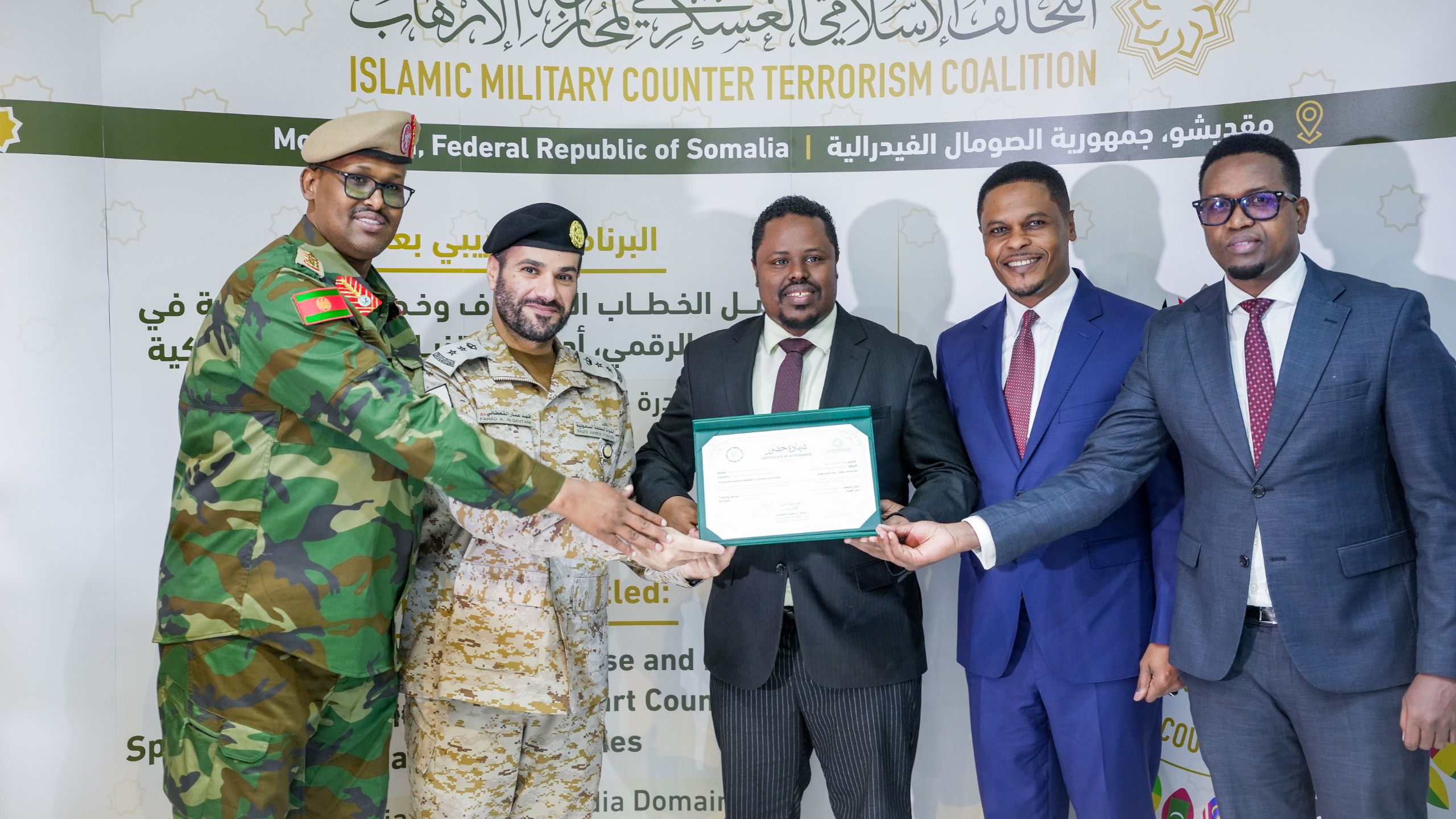
Forty Somali journalists, media professionals and social media influencers have completed four days of specialised training in Mogadishu aimed at strengthening Somalia’s response to terrorist propaganda and online disinformation. Drawn from public and private media organisations, digital platforms and Somalia’s federal member states, the participants developed practical skills in identifying disinformation, analysing images and video, detecting fake accounts and reporting extremist claims responsibly.
The importance of the programme lies not in the ceremony that launched it, but in the problem it seeks to address. Somalia has spent more than two decades confronting terrorism on the battlefield. During that time, Al-Shabaab and, increasingly, ISIS-Somalia, also known as Daesh, have learned to treat the information environment as part of their operations.
An old photograph presented as evidence of a new attack can travel through messaging groups within minutes. Recycled footage can be given a false location. An invented casualty figure can be repeated by several accounts until it appears credible. By the time journalists or public institutions establish what happened, the original falsehood may already have frightened communities, damaged public confidence or handed terrorists the psychological effect they failed to achieve on the ground.
From my work coordinating defence communications, I have seen the pressure this creates for Somali newsrooms and public institutions. The first reports from a security incident are often incomplete. Journalists are expected to publish immediately, while hostile networks exploit every gap in verified information. A correction issued later rarely travels as widely as the first dramatic claim. Speed matters, but accuracy is what protects the public.
Two threats using the same information space
Al-Shabaab remains the principal terrorist threat to Somalia. The al-Qaeda-linked organisation has killed thousands of civilians, soldiers, public servants, religious scholars, journalists and community leaders. ISIS-Somalia is smaller, but its networks in the north-east have sought to expand their operational, financial and recruitment reach.
The organisations differ in size, structure and geographical concentration, yet both depend on propaganda. They distort religion, exploit grievances and exaggerate their strength to attract recruits, intimidate communities and sustain funding. Their communications are designed for audiences far beyond the locations where attacks take place: material produced in Somalia can be translated, repackaged and amplified across borders.
This is why military success, although essential, is not sufficient on its own. The Somali National Armed Forces and local communities continue to make enormous sacrifices to recover territory, protect civilians and restrict terrorist movement. But when militants lose ground, their propagandists try to conceal the loss, inflate government casualties or circulate old material as proof of continued momentum.
At the initiative’s launch, Defence Minister, Ahmed Moallim Fiqi, said the country’s experience had demonstrated that counterterrorism could not rely solely on military and security measures. IMCTC Secretary-General Major General Mohammed bin Saeed Al-Moghidi similarly warned that terrorist organisations no longer confined their battles to the field.
Journalism as a defence against manipulation
The strategic Peace Journalists initiative was jointly launched in Mogadishu on 22 August 2026 during Major General Al-Moghidi’s official visit to Somalia. It brought together senior figures from the country’s defence, security, justice and information institutions. Its first training programme focused on extremist discourse and hate speech, digital verification, disinformation, coordinated influence operations and the preparation of credible counter-messages.
The participants are not being recruited as government spokespersons. Their value lies in remaining credible journalists and independent communicators who can recognise manipulation before passing it to the public. Responsible security reporting does not mean hiding facts or suppressing criticism. It means verifying terrorist claims, protecting victims’ dignity, avoiding the disclosure of operationally sensitive details and refusing to turn a newsroom or social media account into an involuntary distribution channel for propaganda.
The distinction can be difficult during a fast-moving attack. Reporting that an incident occurred is plainly in the public interest. Reproducing a terrorist video without context, repeating an unverified casualty claim in a headline or publishing images that identify vulnerable survivors may serve the perpetrators’ objectives. The answer is professional judgement supported by better verification skills, trusted contacts and clear editorial standards.
Three priorities for the next phase
Four days of training can sharpen awareness, but it cannot by itself build the lasting skills and connections Somalia needs. The next phase should concentrate on three practical priorities.
First, the 40 participants should form a professional verification network linking Mogadishu with the federal member states. During major incidents, members could share alerts, compare source material and request assistance in checking disputed images, videos and accounts. The network must be secure and should operate without compromising editorial independence or operational security.
Second, Somalia should establish a training-of-trainers programme. Somali journalists who completed the course can adapt its methods to local languages, regional circumstances and the realities of smaller newsrooms. That would allow the initiative to reach beyond a single group and build skills where false information often arrives before national media organisations can respond.
Third, progress should be measured at three, six and 12 months. Assessments should examine how quickly contested material is verified, how often terrorist claims are repeated without context, how many Somali-language verification products are published and whether newsrooms in different regions cooperate during crises. These measures will show whether the lessons from Mogadishu are being used in daily reporting.
Religious scholars, universities and research institutions should support these priorities. Scholars can challenge the misuse of Islamic language, while researchers can examine how extremist narratives move between platforms and audiences. Their work should inform journalism without replacing journalists’ independent judgement.
Somalia brings frontline knowledge
The IMCTC works across four connected domains: ideology, media, military cooperation and countering terrorist financing. Cooperation in each area matters to Somalia, but the partnership should be based on mutual learning rather than a one-way transfer of expertise.
Somalis have accumulated hard-earned knowledge from more than 20 years of confronting terrorism. Soldiers have fought across difficult terrain. Communities have resisted coercion. Religious scholars have publicly rejected extremist interpretations, sometimes at grave personal risk. Journalists have continued to report despite threats and targeted killings.
This experience has shown how terrorist organisations embed themselves in communities, exploit local disputes, collect illegal taxes and disguise criminal coercion as governance. It has also shown the value of community resistance, credible religious leadership, coordinated security operations, accountable institutions and timely communication based on verified facts.
Somalia can contribute these lessons to the coalition’s member states while benefiting from international expertise in specialised training, doctrine, digital analysis and financial disruption. The strongest partnership will leave Somali institutions with skills they can continue using and results the public can see.
The work begins after the workshop
Major General Al-Moghidi’s visit gave practical meaning to international solidarity. Somalia’s fight against Al-Shabaab and Daesh affects the security of the Horn of Africa, the Red Sea, the Gulf and countries far beyond the region. Terrorist recruitment messages and financial networks do not stop at national borders; neither should the response.
The 40 participants now carry a responsibility back to their newsrooms, digital audiences and communities. Their task is to question dramatic claims, verify before amplifying and explain manipulation without reproducing its intended effect. Institutions, for their part, must provide timely and accurate information so that journalists are not left working in an avoidable vacuum.
The real test begins now: whether the participants remain connected, whether their skills reach newsrooms beyond Mogadishu and whether institutions provide verified information quickly during a crisis. If that happens, Peace Journalists will become more than a four-day course. It will help deny Al-Shabaab and Daesh the fear, attention and credibility their propaganda needs.
The author is Hanad Mohamed Hussein, the Director of Communications and Public Relations at the Ministry of Defence of the Federal Republic of Somalia


