

By Abdirahman Jeylani Mohamed
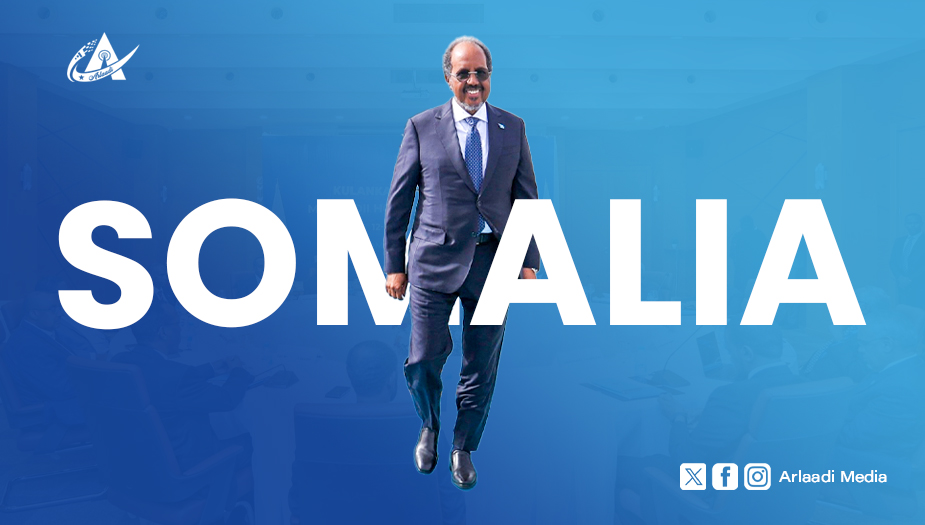
MOGADISHU – President Hassan Sheikh Mohamud’s call for a national conference has stirred both hope and apprehension across Somalia’s fractured political landscape.
While former leaders and opposition figures have cautiously endorsed the initiative, their statements carry an undercurrent of doubt—rooted in decades of unmet promises and squandered opportunities.
This conference arrives at a critical juncture. Somalia is grappling with an entrenched insurgency, fragile state-building efforts, and mounting tensions between Mogadishu and federal states. If executed with sincerity, it could mark a turning point.
But if it follows the well-worn path of past gatherings—grand declarations followed by inaction—it risks deepening public disillusionment at a time when trust in government is already perilously thin.
The Weight of Expectations
The conference’s proposed focus—counterterrorism and democratic transition—addresses Somalia’s most pressing challenges.
Yet, the very fact that these issues remain unresolved after years of similar dialogues speaks to a deeper problem: the gap between political rhetoric and tangible progress.
Previous national conferences, such as those in 2016 and 2020, produced ambitious communiqués but failed to translate words into action.
The fear now is that this gathering could become another performative exercise, designed more to project unity than to confront hard truths.
Voices of Support, Whispers of Doubt
Former leaders – including ex-presidents and ex-prime ministers – and opposition figures have publicly backed the initiative, framing it as a necessary step toward stability.
Yet their endorsements come with implicit warnings. Some stressed the need for “genuine inclusivity,” while others cautioned against “closed-door deals that exclude key stakeholders.”
These statements reflect a broader anxiety that the conference could be co-opted by political elites, sidelining dissenting voices in the name of consensus.
Opposition figures have been more direct in their skepticism. Some question the timing, suspecting the government of using the conference to consolidate power ahead of the 2026 elections.
Others demand clarity on the agenda—will it tackle contentious issues like federal resource-sharing, electoral reforms, and the integration of regional forces into a national security framework? Without concrete answers, suspicions will only grow.
Lessons from Past, Risks for the Future
According to Somali political affairs analysts, for this conference to avoid the failures of its predecessors, it must confront three critical pitfalls.
First, exclusionary participation will doom any chance of success. If the guest list is dominated by the usual political figures—with little representation from civil society, women, youth, or marginalized communities—the outcomes will lack legitimacy. Somalia’s crises cannot be solved by the same actors who have presided over years of stagnation.
Second, vague commitments without enforcement mechanisms are a recipe for failure. Past conferences have produced lofty resolutions that were promptly forgotten. Any agreements reached this time must be tied to clear timelines, accountable bodies, and independent oversight. Without consequences for inaction, even the most well-crafted plans will gather dust.
Third, ignoring regional dynamics would be a fatal miscalculation. Somalia’s security and political trajectory are shaped by external forces. A conference that treats Somalia’s challenges as purely internal will produce solutions detached from reality.
A Roadmap for Credibility
To salvage this conference from becoming another missed opportunity, the government must take decisive steps. Transparency is non-negotiable—the agenda must be published in advance, allowing for public scrutiny.
Participation should extend beyond political elites to include opposition groups, federal member states, and independent experts. An independent secretariat should oversee implementation, insulating the process from political interference.
And civil society must have a formal role in monitoring progress, ensuring that resolutions are not abandoned once the spotlight fades.
A Test of Political Will
President Hassan Sheikh has framed this conference as a unifying endeavor. But unity cannot be decreed—it must be earned through genuine dialogue, compromise, and a willingness to confront uncomfortable truths.
Somalia has exhausted its quota of symbolic gatherings. If this conference fails to deliver, the consequences will extend far beyond political disillusionment.
It could embolden Al-Shabaab, exacerbate federal-state tensions, and further erode public faith in governance. The coming weeks will reveal whether Somalia’s leaders are capable of rising above narrow interests.
Nevertheless, the Somali people, weary of broken promises, are watching closely. This time, anything less than real progress will be seen not just as a failure—but as a betrayal.
The author is Abdirahman Jeylani Mohamed, current Director of Arlaadi Media, a foreign policy journalist and communications specialist, based in Mogadishu Somalia | @JaylaaniJr (X formally Twitter).


