
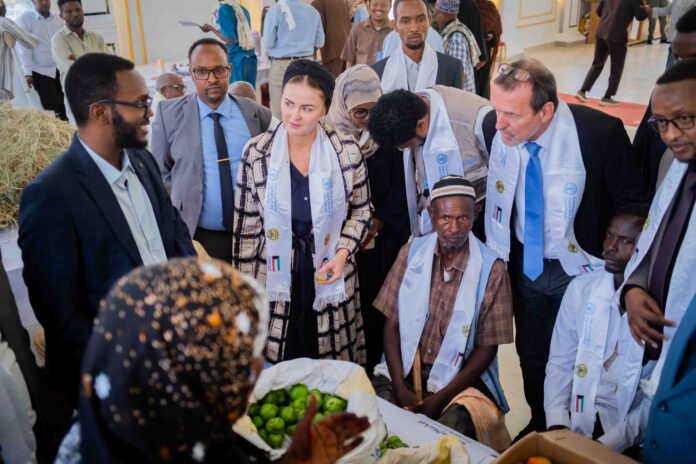
BURAO, Somaliland — A development project aimed at improving access to water and strengthening local food production has reached 550 people in Somaliland, as communities continue to face the pressures of drought and unreliable rainfall.
The Food and Agriculture Organization, together with Somaliland’s ministries responsible for water and agricultural development, marked the completion of the Villages of Hope project in Burao, according to the FAO. The initiative was funded by the State of Kuwait and focused on strengthening water access and local food production.
The project was designed around the idea that reliable water is central to the survival of rural households. Its activities included the rehabilitation and upgrading of water catchments, alongside efforts to support climate-resilient food production and diversify livelihoods.
For communities dependent on agriculture and livestock, those improvements can be particularly important. Water shortages can quickly affect household consumption, livestock health and the ability of families to produce food or generate income.
The project’s completion comes as Somalia and Somaliland confront a broader climate challenge. FAO has warned that Somalia’s drought conditions have intensified and that the country remains highly vulnerable to repeated climate shocks, including droughts and floods.
FAO has also urged communities and authorities to prepare for possible El Niño-linked flooding later in 2026, underscoring the increasingly unpredictable conditions facing rural populations.
The Villages of Hope initiative was implemented in the Burao and Oodweyne districts and was intended not only to improve access to water but also to help households move toward greater self-reliance through agricultural production and diversified livelihoods.
The completion of the project offers a measure of progress, but the underlying challenge remains substantial: sustaining water infrastructure and food production in communities where climate shocks can repeatedly erode development gains.
For the 550 beneficiaries, the project represents more than the completion of a development programme. It is an attempt to make basic resources — water, food and livelihoods — somewhat more dependable in a region where each prolonged dry spell can threaten the fragile foundations of rural life.