
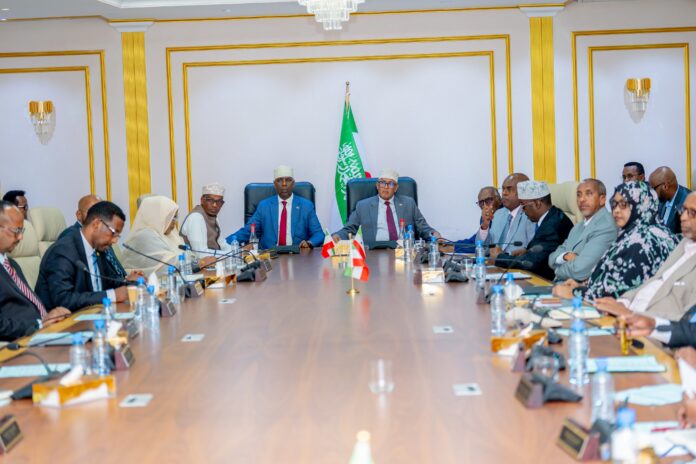
HARGEISA, Somaliland — Somaliland’s cabinet on Wednesday focused on rising petrol prices, public financial reforms and electricity shortages in the port city of Berbera, as the government reviewed key economic challenges at its 72nd session.
The meeting was chaired by President Abdirahman Mohamed Abdullahi, known as Irro, with Vice President Mohamed Ali Aw Cabdi in attendance.
The trade and tourism minister, Abdirahman Hassan Nur, said petrol prices had increased because domestic stocks were declining while the government awaited new supplies.
He said authorities were working with fuel traders and filling stations to manage existing stocks and avoid shortages. Diesel prices remained unchanged, with supplies considered sufficient in the short term and a new shipment expected next week.
The finance and economic development minister, Abdillahi Hassan Adan, said Somaliland had formally launched amendments to its National Financial Management Law, Law No. 75, on Wednesday.
The revised legislation is intended to strengthen public financial management, transparency and accountability. The ministry is also preparing an electronic system for government-issued licences, permits and certificates.
Preparations for the 2027 national budget have also begun, with ministries and government agencies instructed to submit their budget proposals.
Electricity supplies in Berbera were another major issue discussed at the meeting. Energy and Minerals Minister Ahmed Jama Barre said reliable and affordable electricity was essential to the city’s economic growth, particularly as Berbera develops as a major commercial and port centre.
The minister called for sustainable investment and long-term solutions to meet growing demand for electricity.
The cabinet also reviewed security, with the interior minister reporting that security remained stable across Somaliland, apart from routine criminal activity.
The ministers’ discussions highlight the government’s immediate focus on maintaining fuel supplies, strengthening public financial management and addressing infrastructure constraints in Berbera.